 FIIDA
Follow a customer request from the first contact to a result the business can verify. This guide describes our architecture and the first workflow we plan to validate with CYOO.
Five layers, from outcome to channel
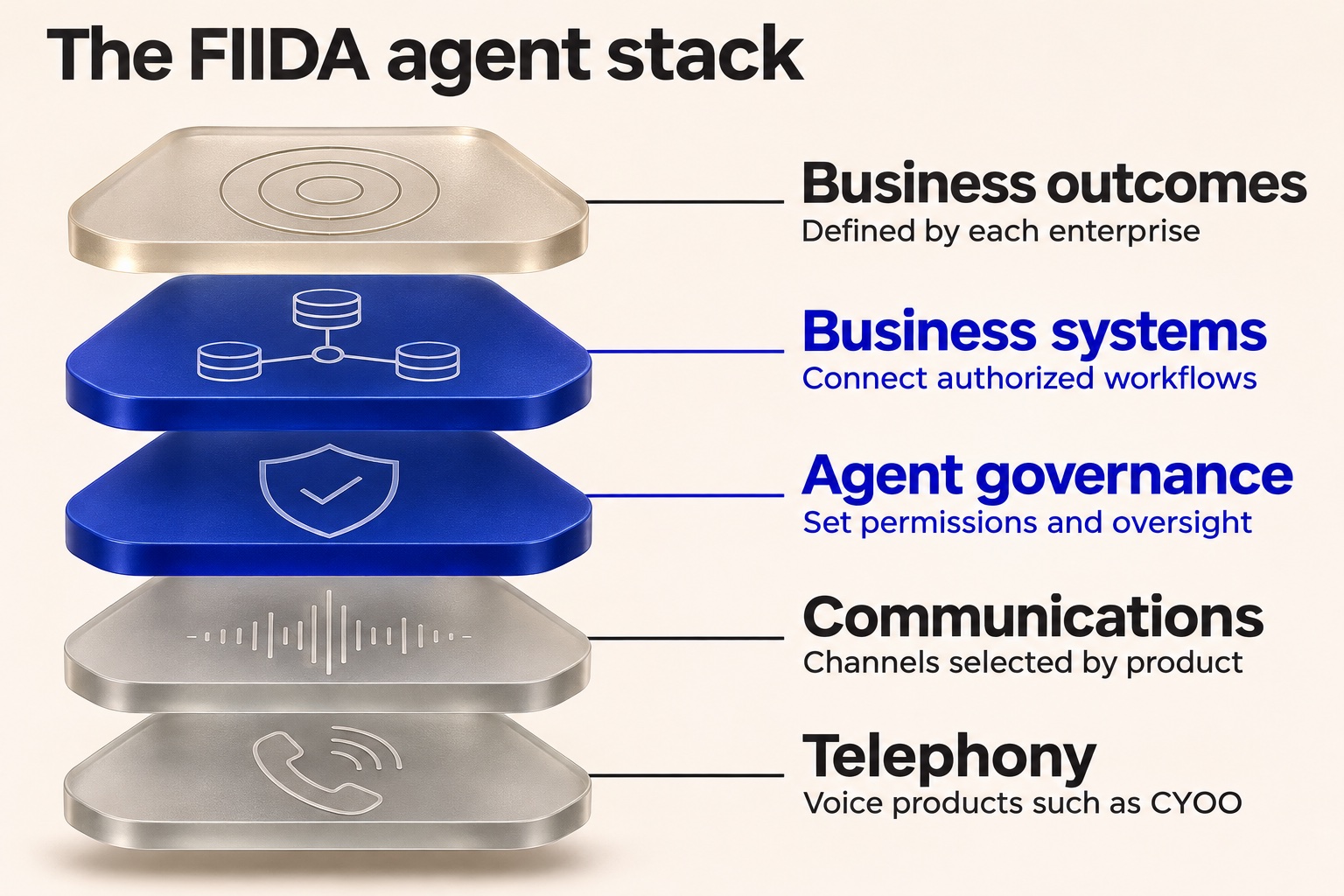
- Business outcomes
- The customer defines success. A sales team may need an assigned lead with a callback deadline. A clinic may require a confirmed time slot and a booking reference.
- Business systems
- FIIDA defines how a product requests an authorized action, receives a system reference and checks its status. The customer chooses the CRM, calendar or ticketing system that holds the official record.
- Agent governance
- FIIDA defines who the agent acts for, which data it may read, which actions require approval and when a person takes over. The customer sets the permissions for its own business.
- Communications
- The product manages the conversation, including audio, interruptions and handoffs. CYOO can use speech and media providers here. A form-based product can submit the same business request through a web interface.
- Telephony
- For a telephone product, CYOO connects numbers and inbound routes provided by a carrier. A product using a web form can omit this layer.
Who is responsible for what?
- FIIDA
- Owns the shared governance rules and business-system interfaces. Its acceptance evidence includes an authorization decision and a traceable system receipt.
- CYOO
- Owns the voice experience across telephony and communications. It collects the caller’s intent and passes a structured request to the foundation. A call log is evidence of a conversation.
- Customer organization
- Owns its business policy, system access and outcome. The CRM administrator grants scoped access, the sales manager defines a valid lead, and a named teammate handles the callback.
- Third-party providers
- A carrier supplies the line, a speech provider transcribes the call, and a CRM vendor exposes an API and returns a record ID. A model provider may help interpret intent; FIIDA and the customer still determine whether the action is permitted. One provider may serve several layers.
Example · A lead from an inbound call
- A caller asks a merchant for a quote. CYOO confirms the callback details and the request.
- Governance checks the merchant and the permission to create a lead. If approval is missing, the designated person receives the request.
- The connector submits the request once and retains the CRM’s record ID. After a timeout, it checks for an existing record before retrying.
- The merchant looks up the lead by ID and verifies the assignee. A completed callback is a separate outcome, evidenced by the follow-up record.
This is a proposed pilot. A live call, a successful CRM write and a completed callback each require separate evidence from the pilot business.
How the stack guides product decisions
Start with one business outcome and one target system. Test authorization, duplicate requests, timeouts and handoffs in a sandbox. Validate real transactions with the first business. Then try a second channel or product and use the measured integration effort to decide what FIIDA should maintain centrally.
For each proposed feature, record its primary layer, dependent layers, owner and acceptance evidence. For example, a CRM retry belongs to business systems. Its acceptance test replays a request and finds exactly one lead.
Questions for a customer conversation
Ask which event starts the work, where the business verifies completion, who may authorize a write, and who receives exceptions. Record the answers in a pilot brief with one scenario, one accountable person and one verifiable result. Describe tested features using evidence from the relevant environment.